
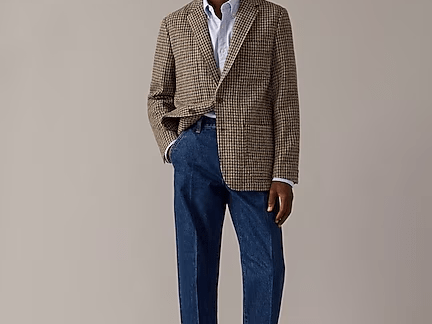
Sport coats. Blazers. Sport… uh, jackets. Known by many names, or rather, basically just those three, the sport coat has been a menswear staple since sometime around the 19th century, originating in England and its aristocratic populace. While there technically are distinctions between a sport coat and a traditional blazer, they’re still iterations of the same basic idea. A deviation of longer, more formal outerwear, the first sport coats were intended for their very namesake – that is, sporting.
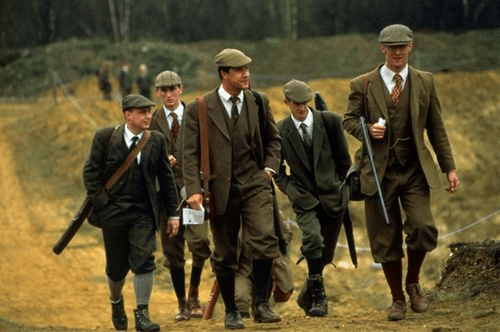
Hunting. Fishing. League of Legends competitive play. You know, the works. Due to their shorter length than the more formal outerwear that men typically wore out on the town, the first sport coats lent wearers greater agility and freedom of movement. Perfect for sauntering about the English countryside with the lads. Much like those Nikes you told your 3rd grade pals could “make you jump higher,” sport coats offered a tactical advantage.
While it might be funny to imagine Lebron James rocking a 3-button tweed on the court, these jackets were considered fairly casual and, well, sporty! That’s not to say they weren’t still seen as elegant in their own right. After all, it was a gentlemen’s garb for gentlemen’s sport. A good sport coat was still, unlike the sweatsuits of today, a tailored garment.
Some consider the British Norfolk jacket to be the first iteration of these garments, subtly named after the Duke of Norfolk. These differ from more modern sport coats in a few ways. For one, they’re usually belted, either fully, or simply a “half belt” in the back. They’re also typically made out of thick woolen fabrics like tweed, and are known for their large, patched pockets, as well as their distinctive box pleats on the back.
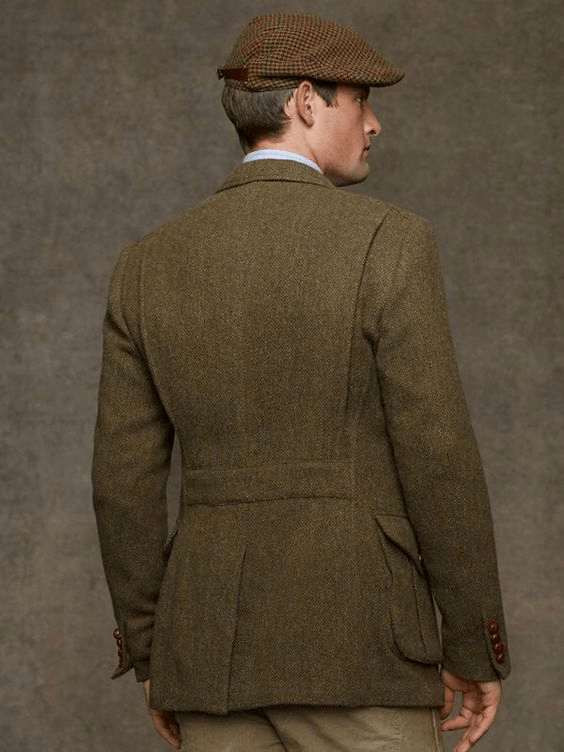
While the Norfolk jacket is still a thing (and a beautiful one at that), most modern sport coats have taken on a more streamlined appearance and construction, and come in basically every fabric, including wool, cotton, linen, and more.
All this considered, you’re likely wondering why I’m delving into the history of this garment.
In the modern fashion landscape, things have become increasingly casual. So much so, that in some regions and social circles, wearing any tailored garment means that you’re “dressed up.” And few want to be overdressed for most occasions.
I think this is stupendously silly, and hardly true. Yes, a sport coat can be dressed up, but first and foremost, they are relatively casual garments. Kinda. At least, more casual than worsted wool suits and the like. Today, “casual” has also taken on a meaning that includes khaki cargo shorts and Legend of Zelda Tri-Force T-shirts. A good outfit that incorporates a sport coat can exist as a sophisticated middle ground between extremes.
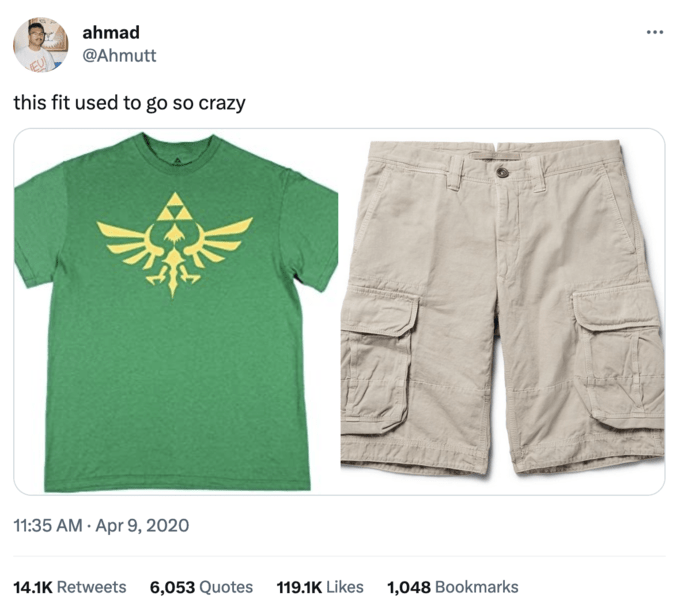
So, I like to make the following distinction. Sport coats allow you to embrace an “elevated casual” look. It’s put-together, but it doesn’t demand a tie. It can be worn with slacks and an oxford, or jeans and a T-shirt. Both still read as casual – and if done well, slick as frick, bro.
Provided you know what you’re doing, that is. Which is why I’d like to give a bit more context into what is considered a true sport coat, how it should fit, and what you can wear it with.
What Counts as a Sport Coat?
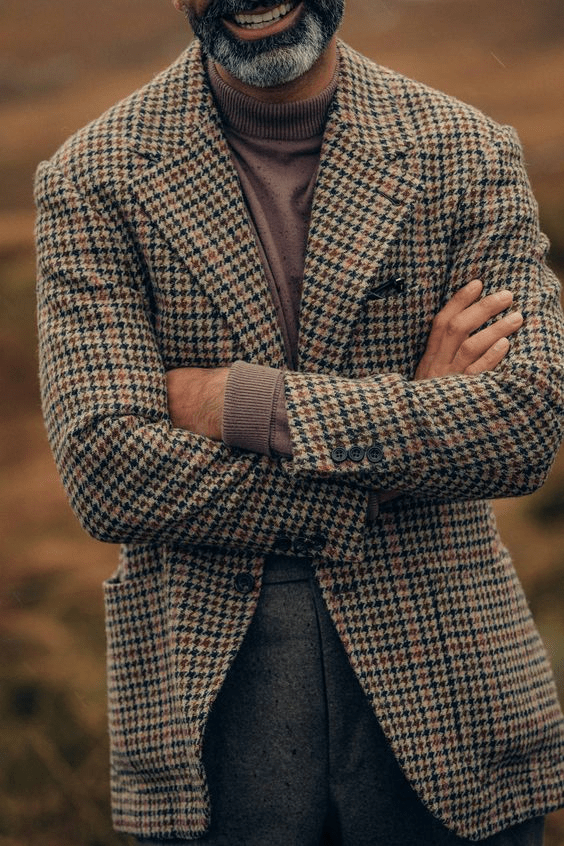
Let’s start with what isn’t a sport coat. That suit jacket you decided to toss on over some slim-fit Levi 511s? That doesn’t count. Also, consider ditching the 511s. More on that later.
A lot of guys make the mistake in thinking that they can just substitute any old suit jacket as a sport coat. This isn’t usually true. You need to pay attention to the fabric type and the pattern in order to determine if a suit jacket can work as a sport coat.
This is easy to do if the suit is composed of a casual fabric, such as cotton, corduroy or tweed. It gets trickier when you’re dealing with smoother, finer fabrics that can often read as more formal or business-appropriate, such as worsted wools. It’s not off the table though – as some patterns and textures still distinguish a jacket as something that can be worn separately. Telltale signs may include windowpane, plaid, or checkered patterns, although rarely pinstripes, which typically look a bit odd when not paired with matching trousers. It takes a while to learn, and in high-fashion spaces there’s definitely more room for rule-breaking, but that’s the gist.
How Should a Sport Coat Fit?
While I hesitate to state any iron-clad requirements regarding the topic of fit, there are a few items worth noting no matter what your preferences are.
Like much of the modern tailoring popularized throughout the late 2000s and 2010s, many men opt for sport jackets that are cut slim. Which itself is fine. I think slim suiting totally has its place. But we obviously need to avoid jackets that are too slim, and while we’re at it, I encourage those who generally only select slimmer fits to experiment with something a bit more full-bodied.
There are a couple of places where you want the jacket to fit perfectly if you’re buying something off-the-rack. Namely, the shoulders and length. Even the best tailor will typically avoid any alterations in those areas. It’s expensive, and oftentimes, not even feasible.
Regarding length, in my opinion, you want the jacket to cover about 3/4 of your ass. Knowing your chest size is super important as well, but generally, a jacket can be tailored a size down or so.
A full-bodied sport coat with a little bit of room inside is nice because it lets you layer with a lot more freedom than what would be available in a close-cut fit. And you need that room for layering options. When we’re talking smart-casual, sport coats are practically begging to be paired with knit sweaters and chunkier denim or oxford-cloth shirts.
I, for one, love how the J.Crew Kenmare jackets (above) fit. Nice and roomy – but it’s flattering!
What Should I Pair It With?
Honestly? Have fun with it! Besides the part where I try to convince you to embrace sport coats as a wardrobe staple, I’m also encouraging you to feel comfortable with experimentation. I think it’s all very well and good to learn about classic style rules through menswear blogs and highly informative TikToks (or as I like to reference them in conversation: “articles”), but some of the best learning comes down to hands-on experience.
That means some mixing and matching on your own. Yes, even with some fits that you’ll look back on and cringe. It’s a learning experience, get with the program!
However, you may be looking for some initial recommendations. So, listen up. I’ll share some popular wisdom – from a deeply unpopular guy. Me!
For a truly relaxed look, many sport coats look great with a pair of jeans and a simple tee. Stick with something plain or with minimal graphics if you’d like to stay on the safe side. Though, sometimes a graphic tee can work. Just use your own discretion. You could also swap the tee for a piece of knitwear – the chunkier the better.
Now, when it comes to the jeans, you can go one of two ways. To lean more casual, as well as for something that reads a bit more “daytime,” consider a light or classic blue wash jean. For something ever so slightly sharper, go with darker denim. I think the latter is certainly easier to pull off, but with some skill, both are viable options.
Regardless of which wash you prefer, definitely avoid denim that is overly distressed or artificially faded.
In terms of fit, high-rise, high-waisted jeans will do you right. I promise. Wrangler Cowboy Cuts are a great budget option, but vintage Levi’s 501s and similar styles pair great. You want a jean with a bit more room, but not too baggy. Straight, regular, and relaxed fits will serve most people the best. If you’re feeling cheeky, consider a flared leg. The Wranglers I mentioned before have a nice, subtle boot-cut that will help you ease into that particular look.
The reason I discourage overly slim or skinny jeans isn’t because they’re officially “out of trend” these days. It’s because proportionally, they can look really awkward with a sport coat, especially a proper, full-bodied one.
Look at it this way. If on top, you’ve got a jacket with some structure to it – heck, even unstructured jackets will provide some accentuation to your shoulder line, it’s going to distinguish your upper half as something sturdy and robust. The drape of the jacket creates an artificial, flattering layer.
But if below, you’re rocking skinny jeans – the sturdiness and flattering drape isn’t there. Your legs will look…sort of wimpy, especially below the heavier top half.
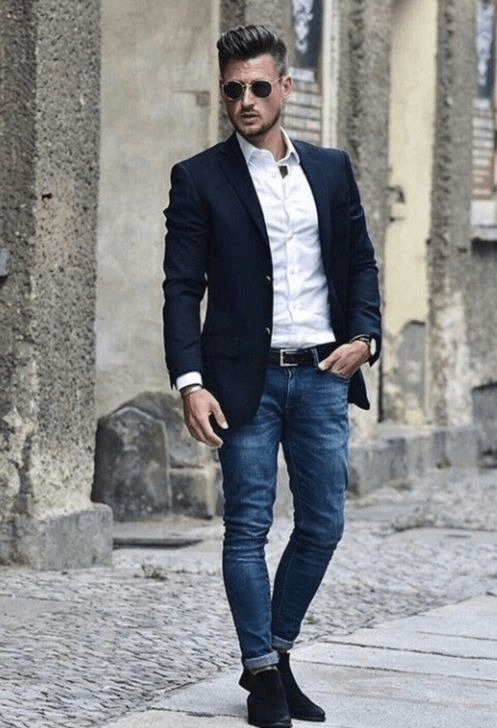
I like to call this the Baba Yaga House complex.
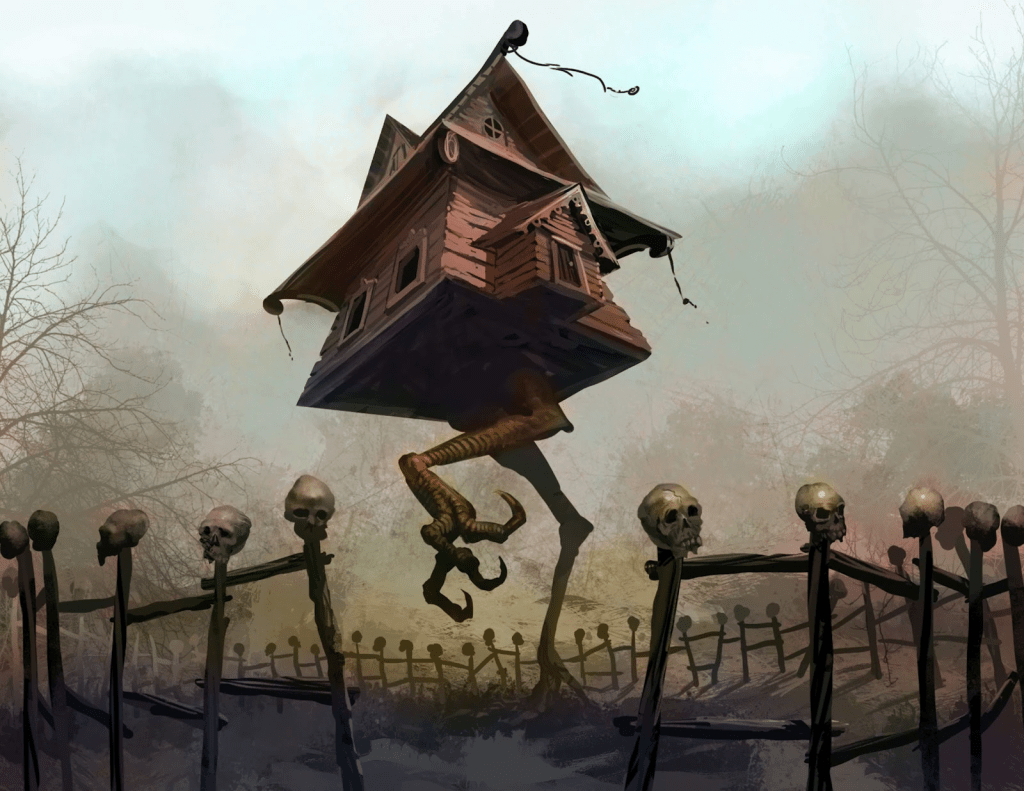
The top half has more presence the bottom. A whole house on a pair of gangly chicken legs. And trust me – I have chicken legs.
It’s not impossible to pair slim jeans with a sport coat, but it runs the risk of throwing off your outfit’s proportions. Like a lot of things, it depends a lot on your build, but for contemporary style that flatters almost everyone, this is why I advise straighter, classic fits.
Whatever options you go with – this looks is truly the most casual way to style a sport coat and can lend a touch of thoughtfulness to the otherwise most relaxed versions of ourselves.
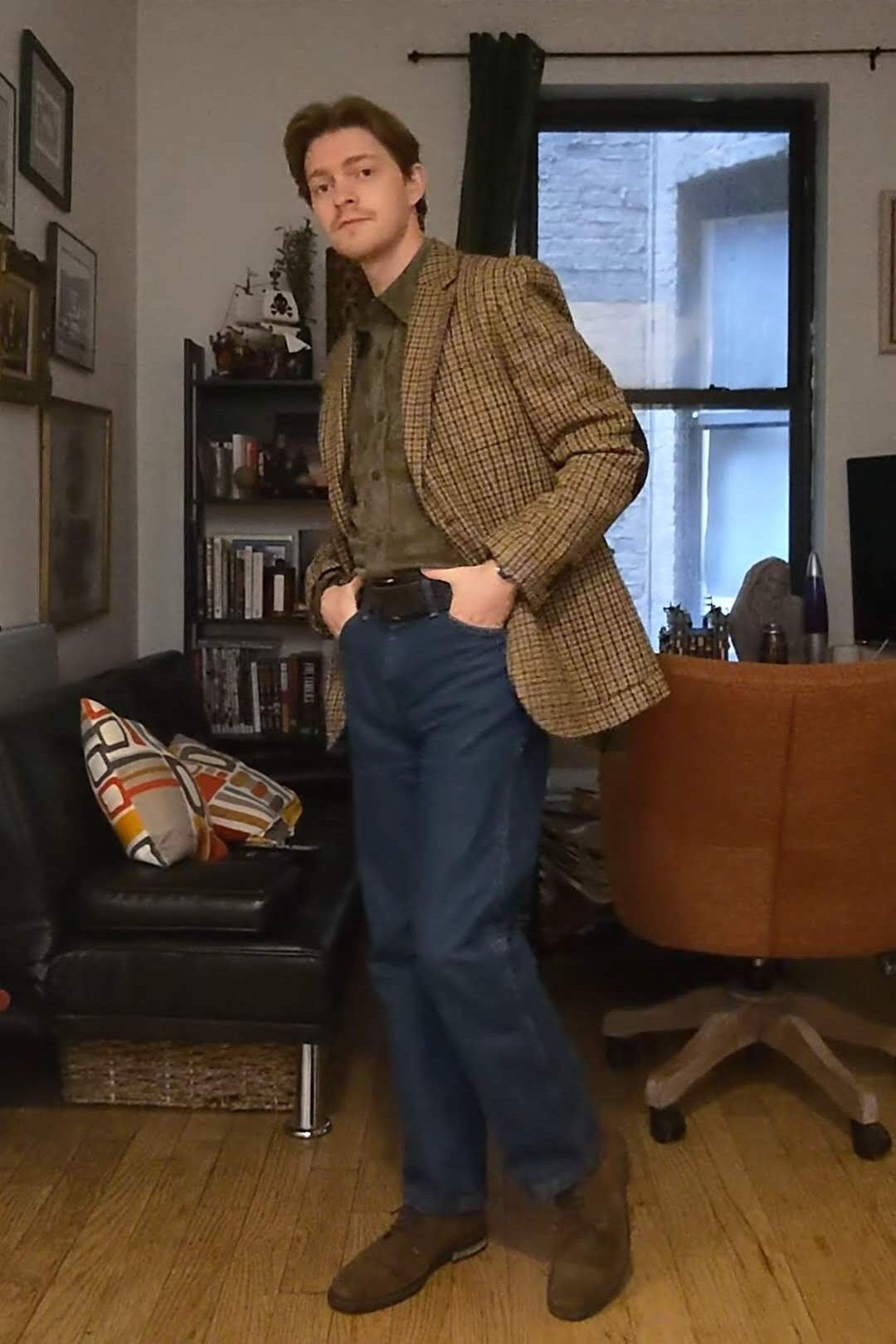
Another option is to wear jeans with an casual button down, such as an oxford-cloth, corduroy, or even denim (yes, it can work). Excuse the blurry pic below (I grabbed it from an even shittier video), but note the mix of dark wash denim (Wrangler Cowboy Cuts), cord shirt, and the wool sport coat. Casual? I believe so. Elevated? I think so, too!
Moving on to pants!
If you’re trying to lean smart-casual, there’s hardly a more tried-and-true uniform than the trouser, oxford shirt, and sport coat ensemble.
Now, pants come in many shapes and forms (truly a remarkable sentence. I am a modern Hemingway). Their respective level of casualness will come down to fabric, construction, and details.
If you want something truly classic – don’t shy away from khakis or chinos! Provided they check the right boxes in regard to fit, they can look super sharp with an oxford button-down and a relaxed sport coat. Pleats help add some extra dimension and will allow your lower half to better match the “fullness” of your upper.
Looking for more texture? I love a good pair of cords. They pair so well with tweed jackets, especially. Pull on some derbies if you want to go full “Dead Poets Society” or a pair of classic sneakers if you want something a bit more chill.
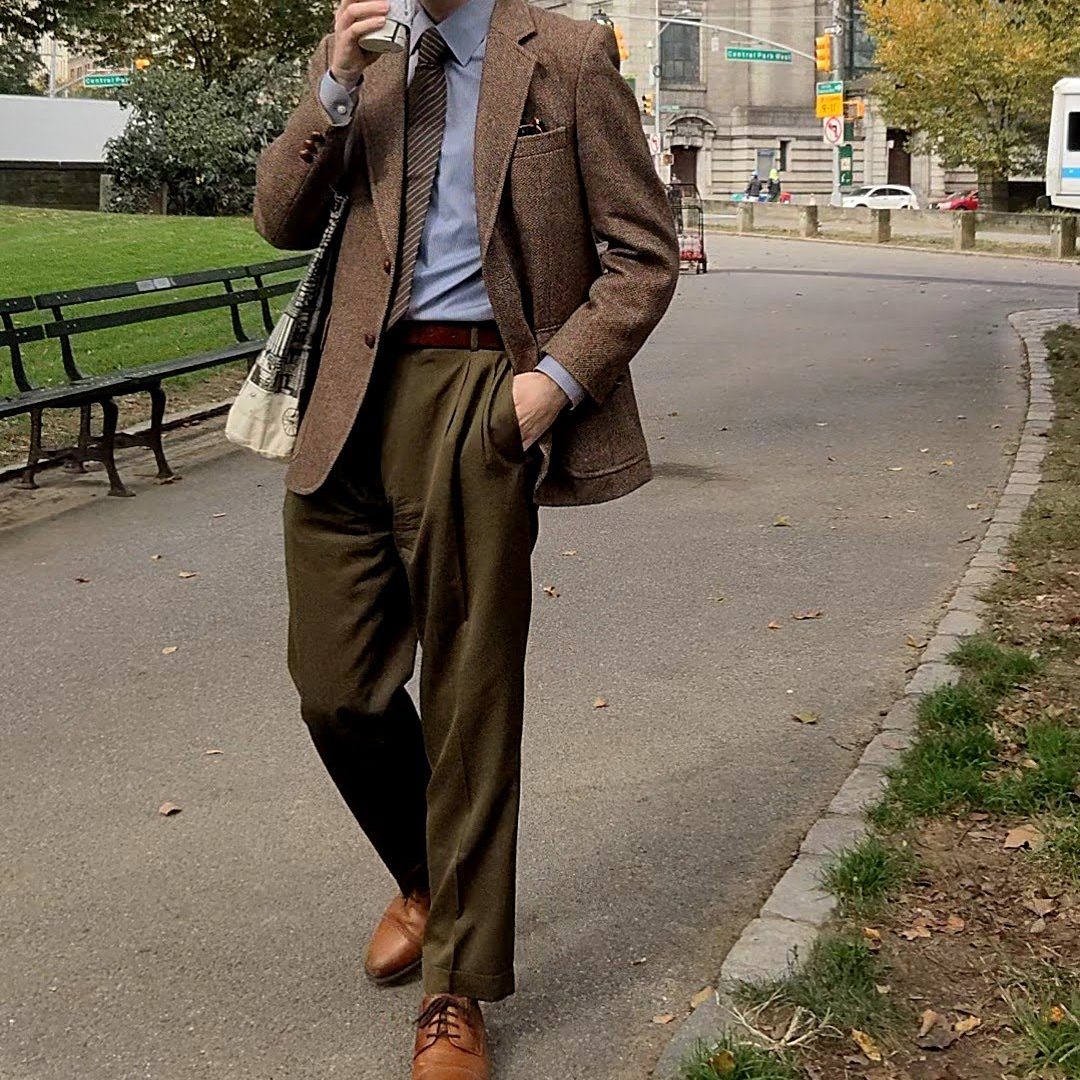
Want to teeter on sharp-but-still-totally-casual? Dress pants (with pleats!) work great – but make sure the fabrics of the pants and jacket contrast. Otherwise, it can give off the impression that you’re wearing a false suit of sorts. Not a good look. Like, at all. A good way to avoid this is to wear two pieces that are each composed of complimentary fabrics and colors. Disregard the tie/dress shirt combo I’m sporting below and note how this brown tweed pairs nicely with the smooth green wool trousers. Add some knitwear or a denim shirt and you’ve got a smart casual fit that just works.
Final Word
Whether sprucing up your Sunday (brunch) best or making your business casual outfit a bit less dull, a sport coat in everyday wear announces to the world that you care, and wearing it casually lets them all know that, not to worry, you don’t care too much.
In a world where the average joe doesn’t put much thought into their casual wardrobe, throwing a piece of tailoring into the mix demonstrates intentionality. It also makes your outfit a lot more versatile. Any of the outfits described above will feel right at home in just about any day-to-day setting. From grocery shopping, to sitting at a cafe looking mysterious, to grabbing dinner at that trendy new restaurant – you’re basically set.
And hey, if that doesn’t work, then just do it for meeeeee. I like tailoring. I want to see more of it when I’m out and about. You wouldn’t want to let me down now, would you?
Would you?
 Matzo Ball Billiards
Leave a comment