
“I love all of my children equally.” – Mothers who lie.
We all have favorites. When considering the endless array of fabrics that one can experiment with in menswear, there’s a few for which I have a tremendous soft spot.
While corduroy is most definitely my runner-up, it is tweed that comes out on top. Which is nice, because the two actually go great together. But more on that later.
Tweed is a relatively rough wool fabric brought to us by the Scots (and viewers like you). And it is magnificent. Originating in the 19th century, the warm, hardy fabric quickly became a staple across Scotland, Ireland, England, and more, most often utilized for jackets, coats, trousers, and even headwear.
Interestingly, my first tweed garment came in the form of a vintage Harris Tweed ulster coat, gifted to me by my godfather. He acquired it while working in British theater in the 70s, and had been using it as a Sherlock Holmes outfit for costume parties ever since. It fits me wonderfully, and has come to be one of the most interesting (and prized) pieces in my collection.
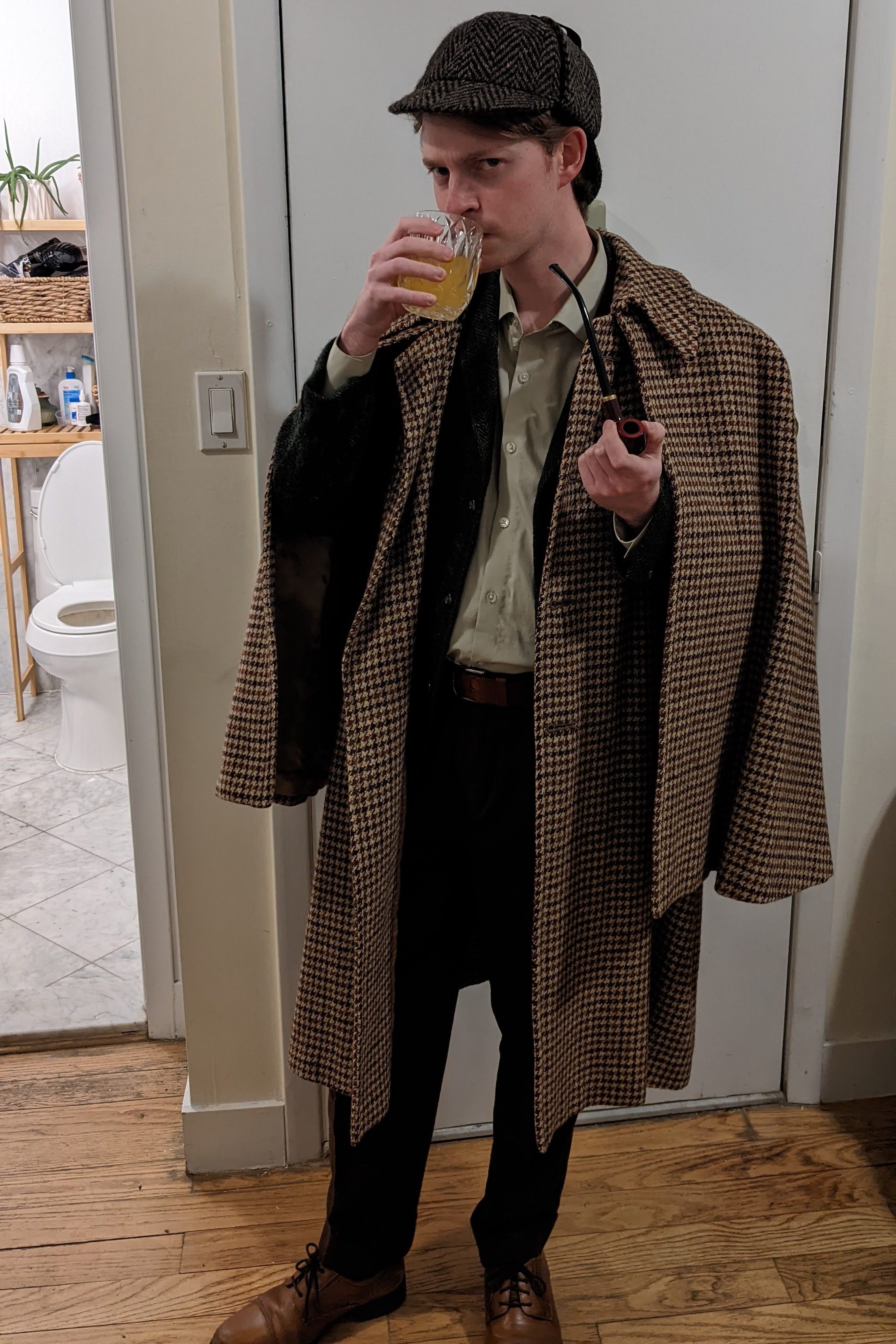
Now, this wasn’t my introduction to the very concept of tweed. As a kid, I remember first noticing the fabric on Indiana Jones during the more professor-y moments of his archeologist career. Harrison Ford looks incredibly sharp and studious in this three-piece, and the fabric continued to be a staple of his character when otherwise not engaged in fistfights with Nazis.

There were many other early influences to be sure. If I recall correctly, Robert Langdon, the protagonist of Dan Brown’s “The Da Vinci Code,” is described as sporting a tweed jacket. He is also, incidentally, a university professor. Thus reinforcing to my young brain the existing link between tweed and academia.
I am not nearly as well-educated as either of these references. I majored in marketing and I’m not terribly bright in most other regards. But the aesthetics of academia have always fascinated me. Often misused but certainly compelling, the “dark academia” aesthetic has continued to be pervasive since I first stumbled across it on Tumblr years and years ago.
When it comes to the fashion elements of the loosely-defined dark academia aesthetic, tweed tends to make an appearance. As a matter of fact, in Donna Tart’s, “The Secret History,” Richard Papen, the angsty protagonist who so longingly wishes to fit in with a pretentious group – goes out of his way to thrift for himself a vintage tweed jacket to better match their aesthetic.
Tweed’s association with the academic world makes it a smart staple in anyone’s wardrobe. It’s a casual fabric, that when used in tailoring, presents its wearer as someone with a touch of laid-back sophistication.

Often, outfits described as “boring” are really just suffering from a severe lack of texture. The worst office fit you know is likely composed of low-rise flat-front chinos, stretch-infused “dress” shirts, and, if a sport coat is involved, it is likely a generic blue worsted wool – or worse, synthetic.
Nearly any outfit can be made significantly better with an extra dose of texture. And tweed is my favorite prescription. Warm and sharp, but still quite casual, it looks as great as a jacket as it does as a pair of pants.
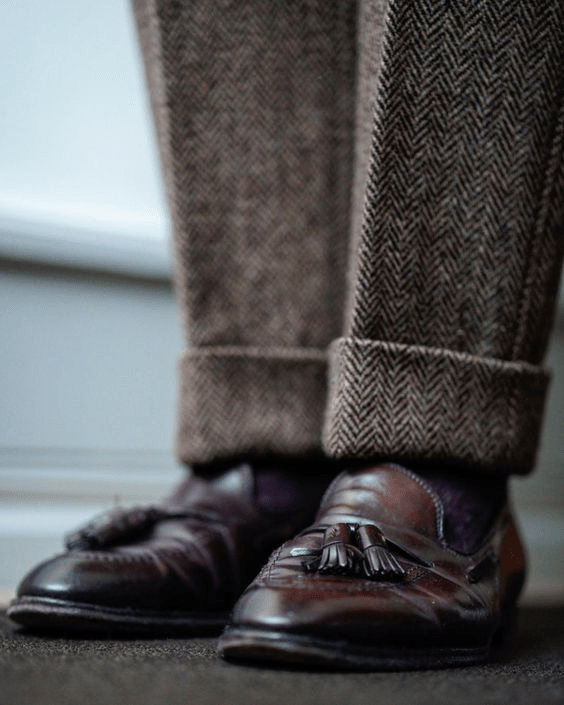
Tweed suits are especially wonderful for their ability to demonstrate that tailored garments which come in sets need not read as formal. Too many folks, usually those who rarely wear them, carry the misconception that all suits are formalwear, simply by nature of being a suit.
Tweed, with all of its rich textures and patterns such as houndstooth, herringbone, overcheck, tartan, and more, reads as anything but formal. Put-together? Definitely. Sharp, even. But formal? Like I explored in one of my previous posts, “The Case for Wearing Sport Coats Casually – Matzo Ball Billiards,” tweed is arguably more synonymous with classic English country style than even its American academic association. Chaps wear this shit to shoot ducks. Not to ballroom dances.
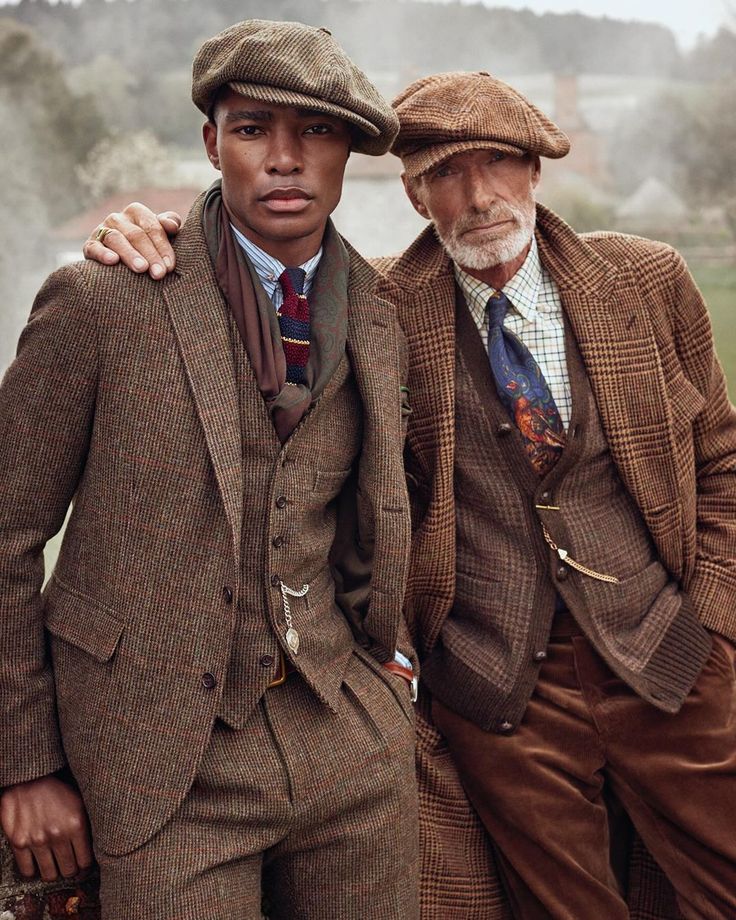
The above style, while very well and accurately executed by Ralph Lauren, may be a bit much for the average joe. I’m certainly not suggesting you go all-in and don the entire ensemble. But take notes – and inspiration!
I do believe tweed can be dressed up, though only to a certain extent. Practically speaking, it works superbly well as a focal point for any casual-adjacent outfit, especially humdrum office attire.
Because the fabric is quite thick, tailored tweed garments reject the flat, lifeless features found on many of today’s jackets and trousers. The lapel roll will naturally carry some oomph factor. The added weight will allow the hem of the pants to drape more gracefully over the shoes. And so on.
If none of that has convinced you, think about longevity, at least. Tweed is hardy. It lasts. Due to its rougher, more “imperfect” nature, it’s easily repaired. Mid or heavyweight tweed sport coat options can replace other forms of outerwear on days that don’t warrant a parka.
To me, tweed means utility. It’s versatility and brilliant visual appeal make it a perfect addition to any wardrobe. Looking to try it out? I recommend you start by picking yourself up a tweed sport coat.
There are plenty of nice new options available across the price spectrum, from J. Crew to J. Press. However, I always recommend thrifting or sourcing one second-hand on sites like eBay and Poshmark. Keep an eye out for Harris Tweed labels if you want something that you know will be authentically Scottish (the fabric, at least).

I must own about seven or eight tweed jackets – most of which are vintage. I like them more than the few newer tweeds I own, and I got them for a lot less. Check your local thrift store or flea market!
I promise, it’ll go great with half of what you already own. You can pair it with your regular old chinos, or grey dress slacks. You can never go wrong with classic denim, either. And the best option? It looks fantastic with corduroy, in my opinion.
All in all, I simply cannot recommend it enough.

Above: The very tweed I wore while writing this in a coffee shop 🙂
 Matzo Ball Billiards
Leave a comment