
Lately, more often than not, my response to “Where did you get that suit?” has been, “eBay, baby.”
It’s become one of my primary sources for all sorts of secondhand fashion items. Not only is it a sustainable, affordable market, but it’s got the goods. If you know how and where to look.
In the last few years, my moderate interest in fashion has clearly ballooned to unexpected proportions, and vintage menswear has remained as one of the most consistent cornerstones of this silly little hobby. I’ve always loved suits, but I admit that is a fairly recent development that I actually understand suits. Like, the construction. Cuts. Fabrics. The styles of various eras.
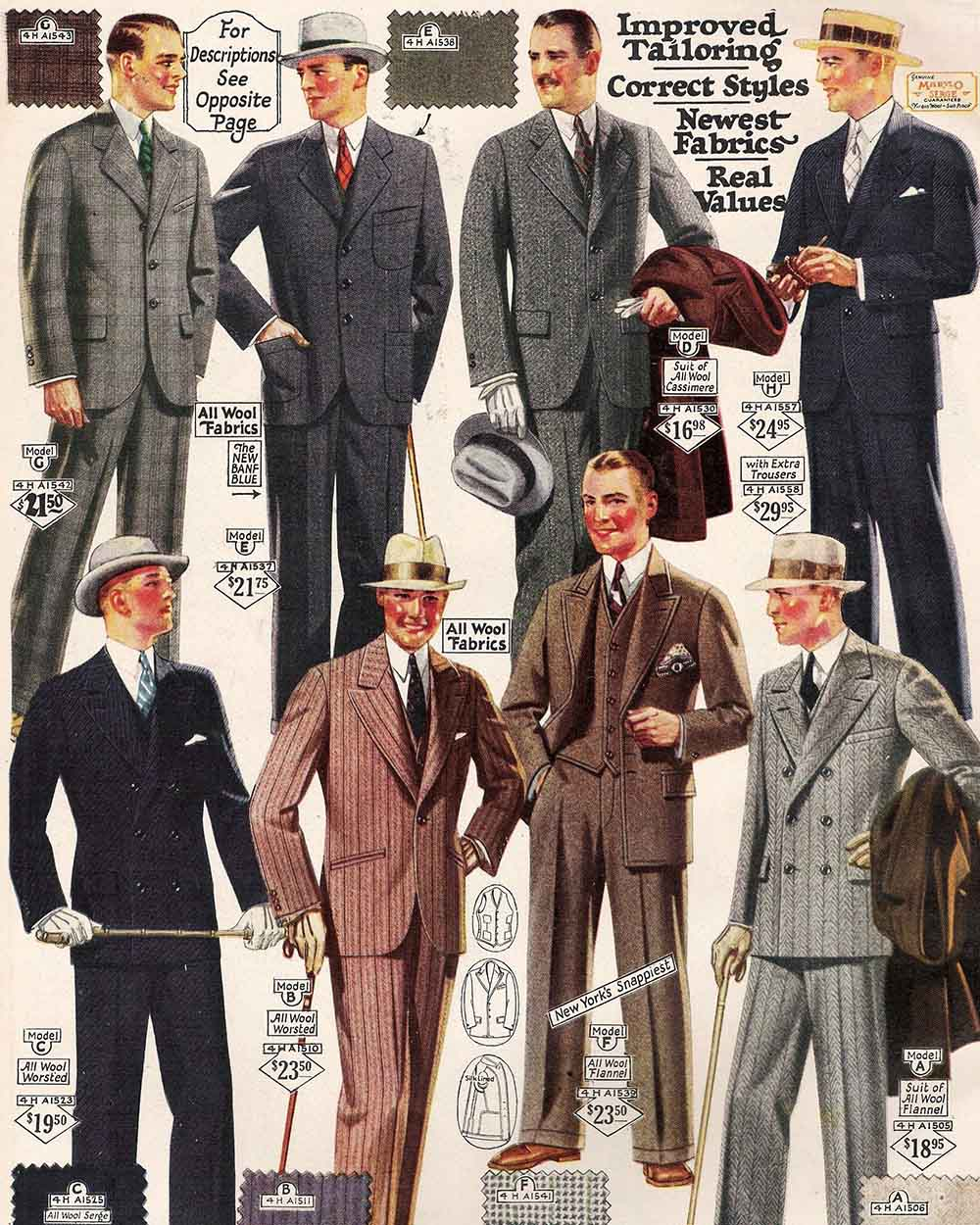
I also happen to me a pretty petite fella. I barely clear 5″9″ and I weigh around 130 pounds. I’m modest of height. I’m rather slim. I listen to Phoebe Bridgers and the TikTok algorithm appears certain that I am a lesbian.
All of this to say, my suit size is pretty small, and thus harder to find. I tend to be a jacket size 36 Short, or 36S… for short. But sizing isn’t necessarily consistent across brands and decades, in my experience. Sometimes, I’m a 36R. Other times I’m a 38S. And once or twice I’ve found a 38R to work just fine, too. It’s confusing really.
With pants, I am usually well suited to a typical 30-inch inseam. But my waist is a 28. Perhaps a 29 if we’re talking about the day after a Jewish holiday.
Basically, I need suits that are technically made for men, but freakishly small-framed men, such as myself. In all honesty, while I sometimes wish I had a somewhat more traditionally masculine build and fit into more commonly sized suits, the trade-off is that I have a wonder metabolism and don’t really struggle with my weight. I can still fit into the same clothes I wore 10 years ago in high school. And with no changes to this pattern at 25 years old, in all likelihood this will continue for quite some time. I don’t want to jinx it, but I know my body pretty well at this point.
It can be a bit challenging to find suits in my size through conventional thrifting means, at times. I’ve certainly scored before.

This wonderful 80s Italian suit comes to mind. Found at one of my local Housing Works thrift shops.
There’s also this brilliant, brown 70s suit I picked up at a vintage shop in London.

However, a visit to most thrift stores and vintage shops will usually reveal that most of their stock is on the larger side – at least compared to me. I rarely find many options under a chest size of 40, and the few that I do tend to be uninteresting junk from modern fast fashion brands.
Also, I live in New York City. Where thrifting is already a highly inflated practice. We don’t have many options that offer true bargains.
All of this has pushed me to look online a lot more than I used to. Like many others, I initially had more apprehensions about this. A suit, even one from off-the-rack, should have a very personal fit. Is online shopping really the most appropriate method?
With anything, there are ups and downs. If I had it my way, I’d prefer to do all my shopping in-person. To try things on. To get a feel for the fabric. To take a good look at the garment’s construction. To awkwardly walk out of the store without buying anything because I have no money.
But alas, in many ways, online secondhand marketplaces have proven too invaluable a resource to ignore. It’s harder in a lot of ways, believe me. But with time, patience, and the right idea of how to go about it all, it can be incredibly rewarding.
And so, here’s my guide on how to get the most out of shopping for suits on eBay and other online marketplaces. Or, as I like to call it, suit-stalking.
Know Your Measurements
You think knowing your jacket size is good enough? Think again, bucko. Like I said, sizing can be pretty inconsistent across different brands and eras of suiting. A size 40R from the early 80s isn’t guaranteed to fit the same way as a size 40R today.
Many sellers on eBay will provide various measurements for the buyer’s convenience. They’ll typically lay the garment down flat and photograph it with a measuring tape. Sometimes they’ll include these photos in the listing, other times they’ll just take down the measurements and put them in the item’s description.
If this info isn’t already available, consider reaching out to the seller. They’ll often accommodate your request if you sound interested enough.
You should know your own measurements. The best way to do this is to take a suit you already own that fits you well, lay it flat, and do the same procedure with a measuring tape. If you don’t yet own anything that fits this purpose, consider getting professionally measured at a tailor.
Once you know where you fall here, it’ll make buying suits online a lot simpler. You can do it with confidence, not taking a gamble if this particular 38S will fit the same as your existing suits.
Besides outlining the most important measurements to know, I’ve also included information regarding what can and can’t be tailored to fit you better, featuring one of my favorite eBay finds, a 1990s Giorgio Armani suit.
Measure Up!
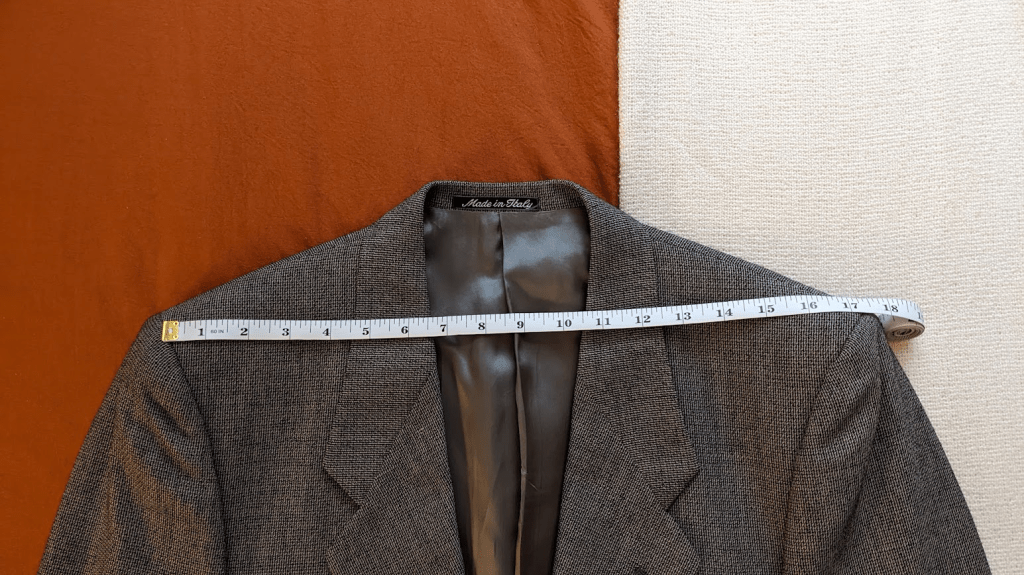
Shoulder to shoulder: This is the span between the seam of one shoulder to the other. With few exceptions, this has to fit you right away. There’s little to be done in terms of alterations when it comes to the shoulders. Too big and it’ll hang off you. Too small and it’ll restrict your arm movement. In my opinion, you can sometimes go an inch over the most form-fitting shoulder span for yourself. While the fit may not be as sharp, there’s a slight amount of wiggle room for a tastefully “oversize” look. Just don’t overdo it.
Pit to pit: Also highly important, this is the measurement from the side seam under one armpit to the other and determines the jacket’s chest size. In my experience, you can sometimes go a size up in chest size and have something taken in a pinch. A fuller-cut jacket will also give you some decent room to breathe.

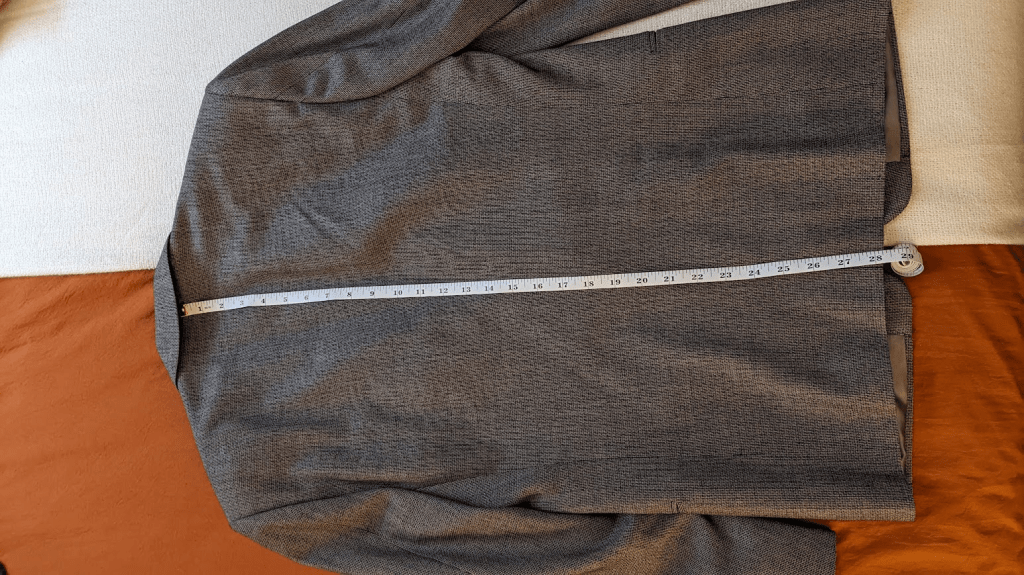
Bottom of collar to bottom of jacket: this measurement spanning down the spine of the jacket, is the second-most important aspect of fit, I believe. A jacket should not be so long that it fully covers your ass, but it shouldn’t be so short either (a heinous crime of many modern suits). Covering 3/4 of your butt is a good rule of thumb. Also, bear in mind that double-breasted jackets (my fave) typically fit a bit longer than single-breasted ones. While it’s sometimes possible to shorten the hem of a jacket, it’s rarely cost-effective and often can’t be done due to the positioning of the pockets.
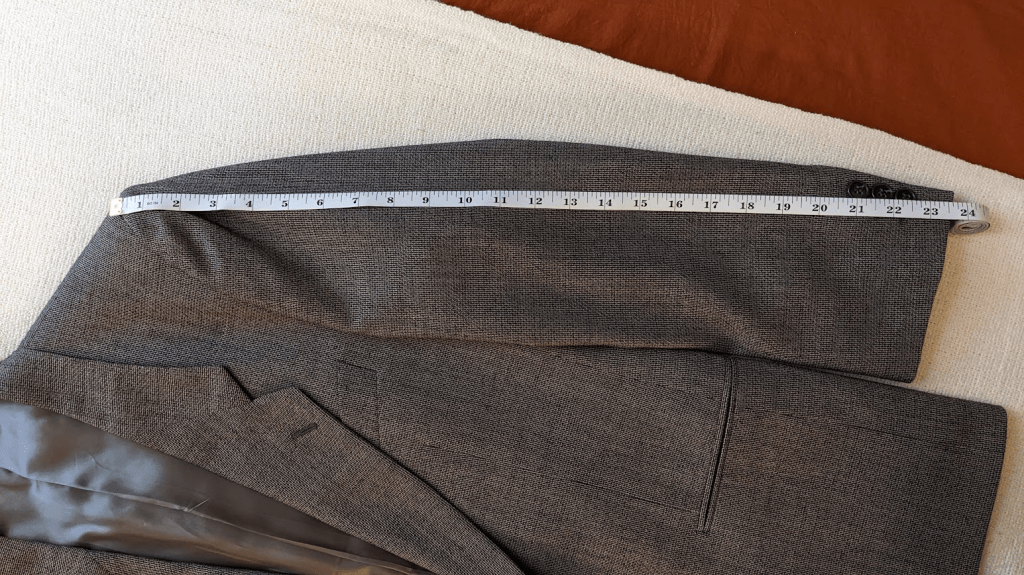
Shoulder to sleeve: Measures between the shoulder seam and the end of the sleeve (duh). Generally, you want a jacket sleeve to extend ever so slightly past your wrist, but not so long that it fully covers your shirt sleeve. The good news is, that it’s not too tricky to get a sleeve shortened, provided there aren’t any fully functioning buttons. In terms of lengthening, you can basically do as much as the fabric available within the cuff will allow. Good tailoring provides a couple of inches, typically. But if the jacket is used/vintage, there’s a chance it’s already been used up for an extension, so make sure this works for you.
Waist: This measurement is the span of the waistband of the pants, which, when doubled, equals your official waist size. Generally, you can take this in by a couple of inches. You can also let it out a bit too typically, but to what extent depends on how much spare fabric there is within the waist and seat.

Rise: This measures between the waist and the center seam between your legs. Like, where your nuts are. It will determine how high the pants come up – and in my opinion, you want ’em high. At least grazing your belly button, ideally.
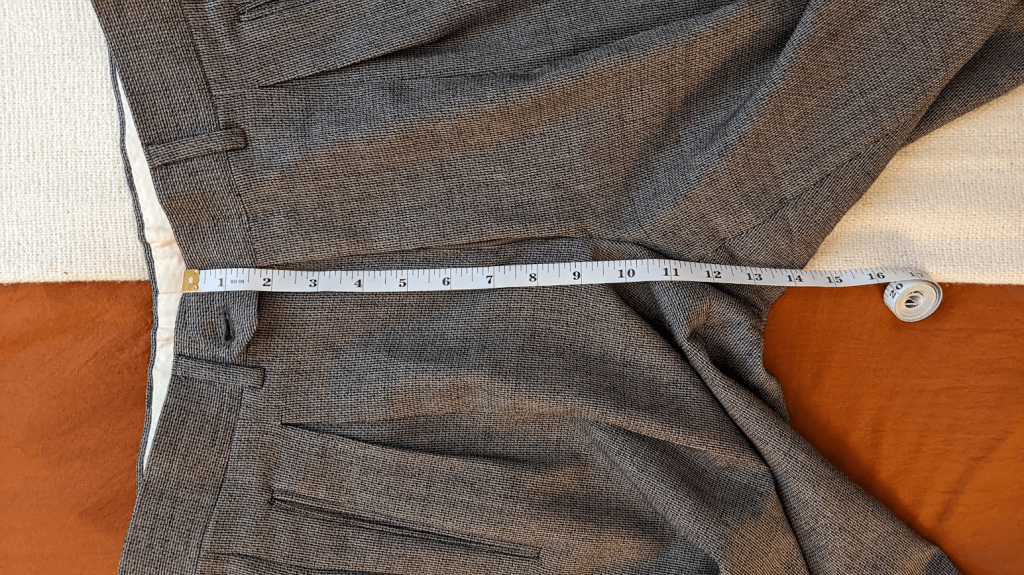
Inseam length: This metric extends from the crotch seam to the end of the pant leg, at the opening. Pants can always be hemmed shorter, but letting them out to be longer will depend on how much fabric exists under the existing hem. It can pay to ask eBay sellers about this, as they won’t always specify in a listing.

Leg opening: Lastly, another measurement worth considering is how wide the leg opening is. Personally, I have grown to despise a tight or tapered opening. I like these roomy!

How to Stalk Search
This part is tiring. I’m not gonna sugarcoat it. To get the best deals and the best finds, you truly need to dedicate a lot of time to regular searches across multiple platforms.
Some platforms such as eBay allow you to save searches which does make things easier, but you want to regularly expand your searches as well, so don’t just rely on these.
On the most basic level, search terms such as “vintage suit (insert jacket size).” I regularly search for “vintage suit 36s” and the like. But while this can return some good results, you should occasionally search a drop outside of your usual size, as a garment’s measurements are really the key, and you can get stuff altered, too.
Another tip is to search for suit by general size. If your a shirt size medium, for example, I recommend periodically checking search terms like “vintage suit men’s size medium.” Of course, suits are not actually measured this way, but less knowledgable sellers will sometimes list that as such, roughly estimating their size. Once you spot something that looks right, inquire about its measurements.
Again, these suggestions apply to eBay, Poshmark, Depop, Mercari, Vinted, The Real Real, Etsy, and others. It’s important to be vigilant in how often you check your favorite platforms, and to keep the search wide.
It takes a lot of time, and it’s pretty counterintuitive compared to just walking in a store and buying something new, or ordering something new online directly from its parent company.
But if you’re into vintage, you know the used market options have a lot more swag. Also, shopping new is expensive! If I wanted to buy a Giorgio Armani suit new today, it would cost me about $2,400 minimum.
I simply do not exist in that tax bracket. Plus, I prefer vintage Armani. Hence, the year-long hunt I endured before finally snagging the previously featured (and thoroughly measured) gem above for only $150 on eBay.
It took forever. Nearly every day for a year I searched “vintage armani 36s” or “armani men’s suit small” and dozens of related terms. I’d occasionally find something, but often the price would still be too high for me at the time, or the item’s condition too poor.
But it did pay off. And I look sick as hell in that suit, in my humble opinion. Insane effort? Absolutely. Worth it? Hell yeah, baby. To me, at least.
Edging eBay
Ultimately, you need to be ridiculously patient, and understand how clothes fit you down to the smallest details. You need to know what it is you like, what it is you’re looking for, and every possible way of phrasing it for the search engine.
It will take a while, but if you’re persistent, you’ll get lucky. And you’ll be able to build a wardrobe carefully and masterfully. And hey, maybe you’re not a mouse like me, and your size is more common. If you’re a 38 chest size or above, I do think you’ll have more options than I do.
How odd is it that I have chosen a hobby that’s statistically stacked against me? Wack.
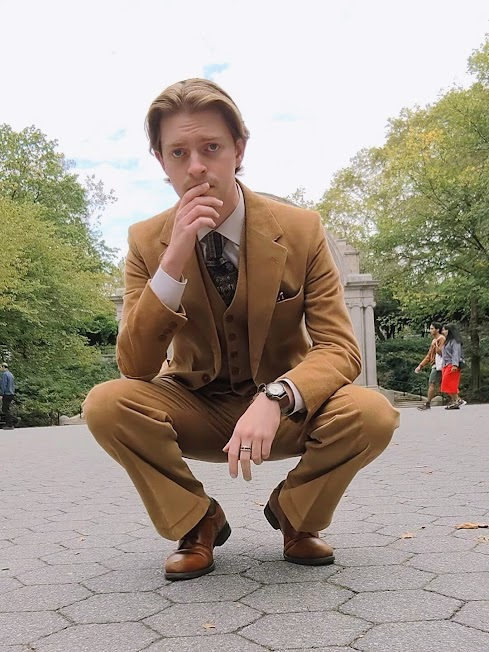
Got this vintage 70s three-piece corduroy suit for like $50 on eBay 🙂
 Matzo Ball Billiards
Leave a comment